Get More From Every XR Study: The Value of Cognitive3D for Academic Research


Turn Rich XR Experiences Into Research Evidence You Can Actually Use
Academic XR research gives researchers an opportunity to study human behaviour in ways traditional research methods often cannot. Inside an immersive environment participants move through space, interact with objects, respond to stimuli, complete tasks, make mistakes, change strategies, and direct their attention throughout the experience. Each of these behaviours can contribute valuable context to a study, but only if researchers have an effective way to capture and analyze them.
That is where XR research can become challenging. The richness of immersive experiences can create equally complex datasets, leaving research teams to connect session recordings, event data, participant information, device signals, researcher observations, and other sources before meaningful analysis can begin. Cognitive3D brings these elements into a spatial analytics workflow designed specifically for immersive experiences, helping researchers capture what happens in XR, explore individual participant behaviour, and analyze patterns across sessions.
For academic research teams, the value is practical. Cognitive3D can help researchers make better use of participant sessions, reduce time spent reconstructing behaviour, investigate important findings with greater spatial context, and create a repeatable XR analytics foundation that can support research beyond a single study.
See More of What Actually Happened
Traditional research metrics can tell you that an outcome occurred, but immersive research often requires understanding the behaviour that produced it. If one participant takes significantly longer to complete a task, for example, completion time identifies the difference without necessarily explaining it. The participant may have misunderstood an instruction, missed an important visual cue, interacted with the wrong object, followed an unexpected route, or struggled at one specific point in the task.
Cognitive3D helps preserve this behavioural context by recording XR sessions and enabling researchers to explore participant activity within the three-dimensional environment where it occurred. Researchers can examine movement, interactions, events, objectives, and other captured signals, while 3D session replay provides a way to revisit individual experiences in spatial context. With supported eye-tracking hardware, gaze and fixation data can provide additional insight into where participants directed their attention.
This gives academic researchers more than another set of metrics. It provides a way to connect a result with the participant experience behind it. When an outlier, unexpected outcome, or interesting behavioural difference appears, researchers can return to the relevant session and investigate what actually happened rather than trying to reconstruct the experience from disconnected data.
Spend More Research Time on the Research
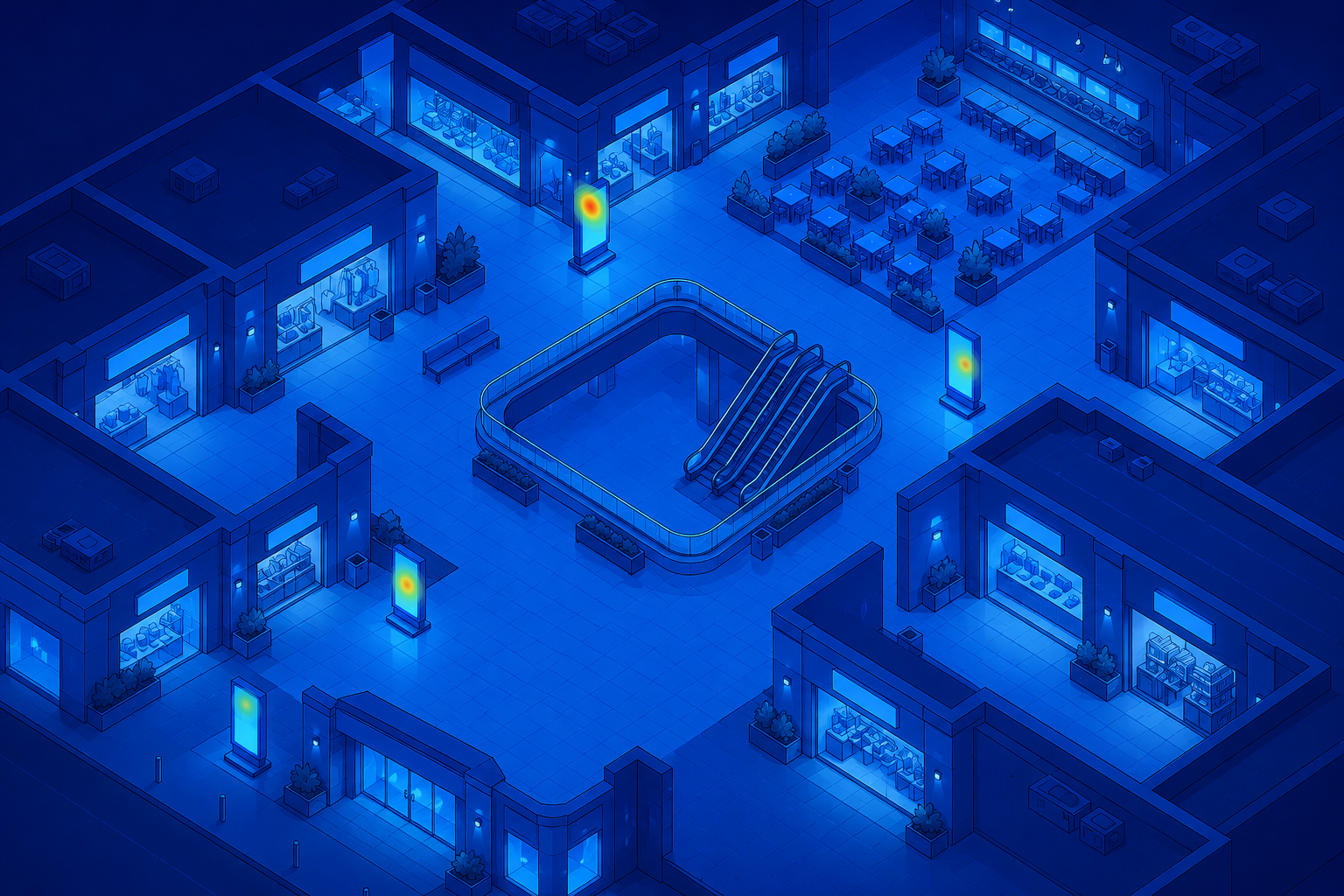
Manual session review can quickly become one of the most resource-intensive parts of XR research. When important behaviours must be identified from recordings one participant at a time, researchers can spend substantial time locating relevant moments, categorizing interactions, documenting observations, and repeating the same process across an entire cohort.
Cognitive3D can make this workflow more focused by allowing research teams to instrument the behaviours that matter to the study. Researchers can define goals and events, capture object engagement, record session activity, and measure whether participants complete, fail, skip, or drop off during important stages of an experience. These structured XR analytics can help teams identify the sessions, behaviours, and outcomes that deserve deeper investigation instead of requiring every recording to be reviewed with the same level of manual effort.
The researcher remains central to the process. Cognitive3D helps make their time more valuable by giving them better access to the evidence they need. Instead of spending hours simply finding what happened, researchers can focus more attention on interpreting why it happened, testing hypotheses, comparing behaviours, and determining what the results mean for the study.
Get More Value From Every Participant Session
Participant sessions can represent a significant investment for academic research teams. Recruitment, compensation, research assistants, specialist equipment, laboratory access, XR hardware, scheduling, and experiment preparation can all contribute to the cost of collecting data. For studies involving specialized or difficult-to-recruit populations, every completed session can be particularly valuable.
Cognitive3D helps researchers preserve a richer record of those sessions. Participant and session information can be organized alongside recorded behaviour, objectives, interactions, and other captured study data, giving researchers the ability to revisit an experience after the participant has left the study.
This can become especially important as analysis develops. A study initially focused on task completion might reveal an unexpected difference in navigation behaviour. Two groups with similar completion rates might turn out to interact with the environment in substantially different ways. An unusual result might warrant a closer look at what occurred immediately before the outcome. When the relevant behaviours have been captured as part of the research design, Cognitive3D gives researchers more context for investigating those questions without relying solely on what was observed during the session.
The result is a stronger analytical return from the participant data the research team has already invested in collecting.
Understand the Behaviour Behind Your Results
Aggregate research results are essential, but they can sometimes hide meaningful differences in how participants arrived at the same outcome. Two participants might complete an XR task in exactly 45 seconds and appear identical in a traditional results table. In the immersive environment, however, one may have followed the intended sequence immediately while the other explored several incorrect locations before eventually finding the solution.
Those differences can matter in research involving learning, cognition, human factors, usability, attention, spatial behaviour, and many other areas. Cognitive3D connects aggregate XR analytics with individual participant behaviour so researchers can examine broad patterns and then investigate the sessions behind them. The platform is structured to allow researchers to move between different levels of evidence within the same research workflow.
Instead of stopping at the outcome, researchers can examine how participants arrived there. That additional context can reveal behavioural differences that would otherwise be difficult to see and can help research teams develop a more complete interpretation of their results.
See Where Participants Direct Their Attention
Movement shows where a participant went. For many academic XR studies, understanding where they directed their attention can add another important dimension.
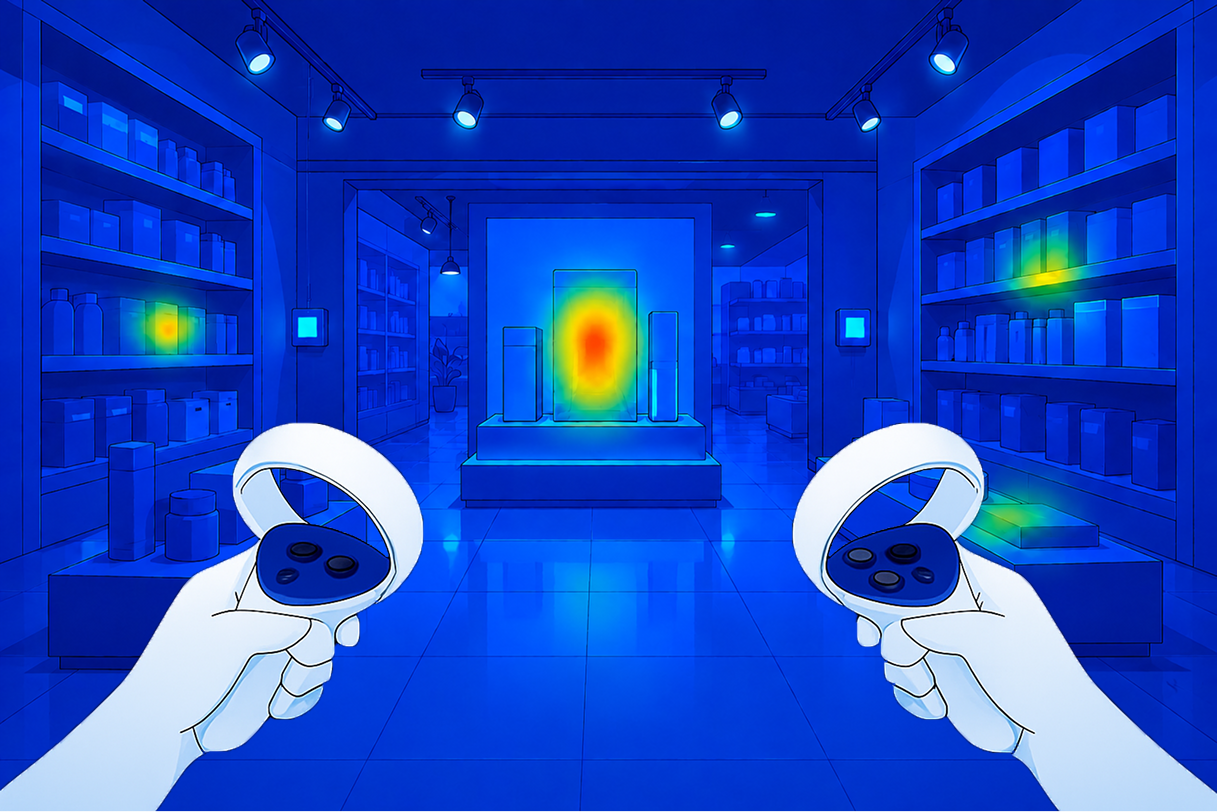
With supported eye-tracking hardware, Cognitive3D can capture gaze direction and fixation information within immersive environments. Researchers can use this spatial gaze data to investigate what attracts attention, what participants overlook, and how visual behaviour relates to interactions, decisions, objectives, and other events within the experience.
This can be particularly valuable for research involving attention, cognition, interface design, human factors, training, and spatial behaviour. A participant might reach the correct location while repeatedly overlooking an important cue, or spend considerable time examining an object before making a decision. Connecting gaze and fixation data to the surrounding XR environment helps researchers interpret those behaviours in the context in which they actually occurred.
Rather than treating eye tracking as an isolated stream of coordinates, Cognitive3D helps make gaze part of the broader participant story.
Connect Participant Feedback With Behaviour
Behavioural data can show researchers what participants did, while participant feedback can provide another perspective on how they experienced it. Bringing those sources closer together can help researchers build a more complete understanding of an immersive study.
Cognitive3D supports collecting feedback within XR through ExitPoll, allowing supported questions to be presented while the experience is still fresh. This gives researchers an opportunity to gather responses closer to the task, environment, or stimulus they are evaluating instead of relying exclusively on participants recalling those moments at a later time.
When used appropriately within the research design, this creates a valuable connection between observable behaviour and participant-reported experience. Researchers may be able to see that a participant struggled with a particular objective and then examine feedback collected around that experience. Neither source replaces the other, but together they can provide a richer foundation for interpretation.
See the People Behind the Patterns
Large datasets help researchers identify trends, but the individual sessions behind those trends can often explain what makes them important.
Cognitive3D allows researchers to move between aggregate XR analytics and individual participant evidence. A team might identify an interesting pattern in objective performance, navigation, object engagement, or attention, then examine the participants and recorded sessions contributing to that result. Cognitive3D’s platform includes participant and session management, 3D session replay, goal analysis, navigation and focus visualization, object analysis, and tools for segmenting and querying XR data.
This creates a more connected research process. Researchers can use aggregate analysis to identify where something interesting is happening, investigate individual sessions to understand the behaviour behind it, and then return to the broader dataset with greater context. Cognitive3D helps make that movement between the cohort and the participant part of the same XR research workflow.
Bring XR Data Into Your Existing Research Workflow
Cognitive3D does not require the research process to end inside its dashboards. Academic teams often need to bring XR research data into statistical and data-science environments for hypothesis testing, modeling, visualization, data transformation, or combination with other experimental datasets.
Cognitive3D supports data access and export as part of its XR data-management capabilities, alongside API/Data resources and tooling for R-based research workflows. This allows researchers to use Cognitive3D to capture, organize, visualize, and investigate immersive behaviour while still bringing relevant data into the analytical tools their research requires.
For academic teams, this makes Cognitive3D part of a broader research infrastructure rather than another isolated analytics platform. Researchers can capture the XR experiment, investigate participant behaviour in spatial context, identify meaningful patterns, and continue specialized analysis in the tools and statistical environments they already use.
Build an XR Research Foundation Your Lab Can Reuse
The value of Cognitive3D becomes even greater when it supports more than one experiment. Academic labs may study different research questions over time, but many of their fundamental XR measurement needs remain consistent: recording sessions, organizing participants, defining events and objectives, capturing interactions, examining individual behaviour, comparing sessions, collecting feedback, and preparing data for analysis.
Cognitive3D gives research teams a foundation for making those processes more repeatable. Labs can develop consistent approaches to instrumentation, participant organization, event tracking, objectives, session review, and data access rather than rebuilding the analytics workflow for every new immersive study.
That means the value of implementation can extend beyond the first project. As researchers become familiar with the platform and establish measurement conventions, the same infrastructure can support future experiments and a growing body of XR research. For labs investing seriously in immersive research, Cognitive3D can become part of the research capability itself.

Catch Problems Before They Affect the Study
XR analytics can provide value before full-scale data collection begins. Pilot sessions are an opportunity to validate not only whether an experience technically works, but whether participants are actually experiencing and interacting with it as the research team intended.
Cognitive3D can capture session activity alongside objectives, interactions, device information, and application-performance data, giving researchers additional visibility into early study sessions. A participant may repeatedly misunderstand the same cue, an objective may not be captured as expected, an interaction may behave differently from the study design, or a technical issue may appear under particular conditions.
Finding those issues during a pilot can be significantly more valuable than discovering them after an entire cohort has completed the experiment. Better visibility gives research teams an opportunity to validate the experience, instrumentation, and participant behaviour earlier, when changes are still easier to make.
Get More From Every XR Study
The importance of Cognitive3D in academic research ultimately comes down to what it helps researchers do with the immersive experiences they have worked so hard to create.
XR studies can generate remarkably rich behavioural data, but richness alone does not make that data useful. Researchers need to be able to capture the right activity, preserve its spatial context, investigate individual sessions, identify patterns across participants, and move relevant data into the analytical workflows required by their research.
Cognitive3D connects those stages. It helps academic teams track XR experiences, explore individual participant behaviour, analyze aggregate insights, investigate gaze and interactions, collect in-XR feedback, and access XR data for further analysis.
For one research team, the biggest benefit may be reducing hours of manual session review. For another, it may be understanding an unexpected participant result without reconstructing the experience from disconnected recordings and logs. For a lab building a long-term XR research program, the greatest value may be having a measurement foundation that can support study after study.
In every case, the goal is the same: help researchers get more useful evidence from the XR studies they are already investing in.
Cognitive3D gives research teams greater visibility into what happens inside immersive experiences so they can spend less effort piecing together the evidence and more time using it to advance their research.
See What Cognitive3D Can Bring to Your Next Study
If your team is investing in immersive research, your analytics should help you make the most of that investment. Cognitive3D gives academic researchers the tools to capture participant behaviour, explore XR sessions in spatial context, analyze patterns across a cohort, and connect immersive data with the rest of the research workflow.
The result is more than better visibility into an XR experience. It is a stronger foundation for understanding participant behaviour, investigating research findings, and getting greater value from every session your team collects.
Explore Cognitive3D for academic research and see how it can support your next XR study.
Ready To See Inside Your XR App?
Start capturing real user behaviour, app activity, and device inputs in full 3D.